Sweatshirt fleece or French terry – which is the better choice?
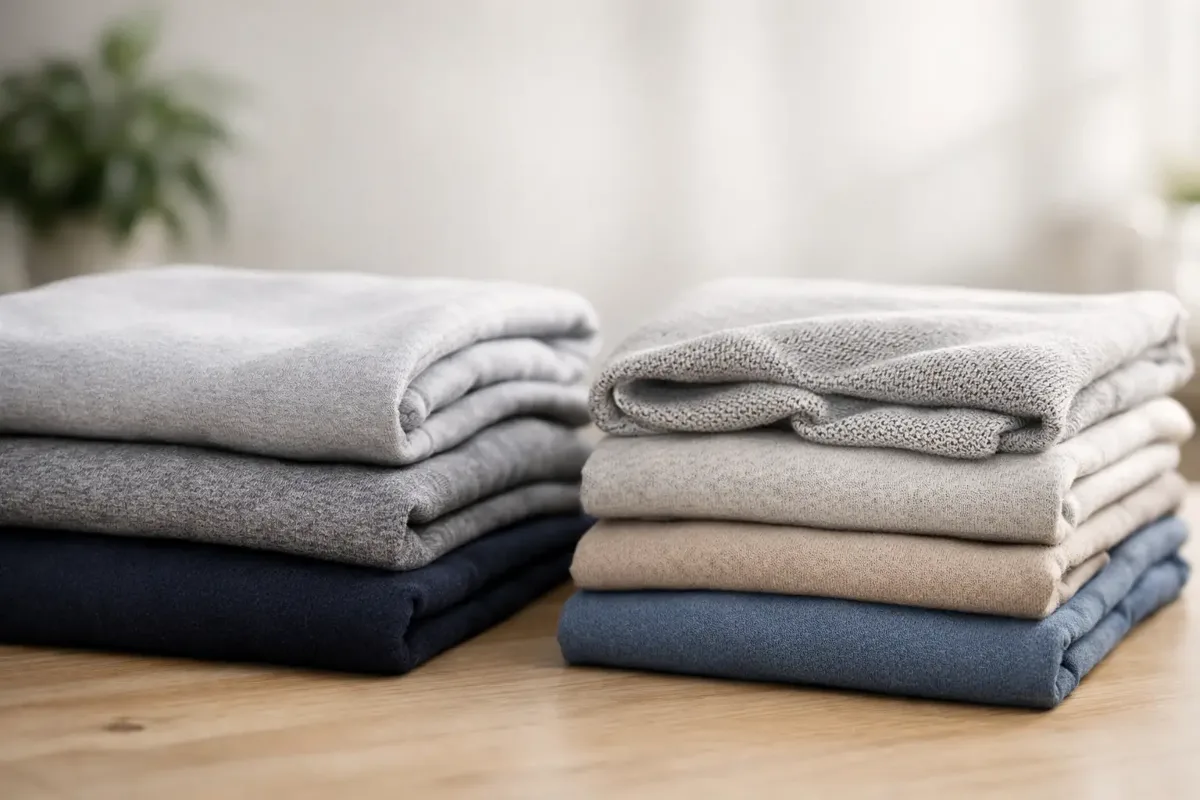
If you're choosing between sweatshirt fleece and French terry for the first time, you'll quickly notice that the two fabrics look pretty similar at first glance. But as soon as you touch them – and certainly once you start sewing – the differences become clear. And those differences decide whether your hoodie hangs nicely, whether the children's trousers stand up to everyday wear, or whether the garment ends up too warm, too heavy or just right.
Sweatshirt fleece or French terry – the key difference
The main difference lies on the inside of the fabric. French terry has those characteristic small loops on the wrong side. This makes it feel a little smoother, lighter and often slightly cooler. Classic sweatshirt fleece is brushed on the inside. That brushed back makes it softer, fluffier and noticeably warmer.
So when you're comparing fabrics, it's worth taking a quick look at the reverse. Loops usually mean French terry. A soft, almost fleece-like inside points to sweatshirt fleece. Both fabrics are generally stretchy, comfortable to wear and designed for relaxed clothing – but they're not meant for exactly the same purposes.
When French terry is the better choice
French terry is a really practical all-rounder for lots of sewing projects. It's usually a bit lighter than sweatshirt fleece, isn't as bulky and can be worn for much of the year. That's a big advantage for in-between seasons, changeable weather and garments you throw on over something else.
French terry is especially popular for children's clothing. Jumpers, trousers, jackets, hats and comfy dresses are lovely to sew from it, because the fabric allows freedom of movement while still having a bit of body. It's ideal for adults too, if you want to sew a casual hoodie or an easy sweatshirt dress that doesn't look too thick.
Another plus: French terry is often a little easier to sew than very bulky sweatshirt fleece. The layers don't get quite as thick at ribbing, hoods or pocket facings. Beginners in particular will notice this quickly at the sewing machine.
That said, French terry isn't automatically always the better option. If you're planning a project for cold winter days, it may well be too light. You'll often miss exactly the cosy warmth you want from a favourite hoodie.
Typical projects for French terry
French terry works particularly well for spring and autumn hoodies, joggers for indoors and out, children's jumpers, beanies, lightweight jackets and cosy loungewear. It's also popular for baby and children's clothes, because it's soft without being too heavy.
If you have a sewing pattern designed for stretch fabrics with a bit of body, French terry is often a safe bet – especially if you don't want the garment to be too thick.
When sweatshirt fleece is the better fit
Sweatshirt fleece comes into its own whenever warmth and cosiness are called for. The brushed inside feels soft against the skin and keeps you much warmer. That's why it's the classic choice for winter hoodies, snuggly jumpers, joggers for cold days and homewear you just want to slip into.
For simple basics, that's a real advantage. Sweatshirt fleece is forgiving, looks high quality and has a cosy feel all of its own. It's also very popular for children's winter clothing, such as warmer trousers, jumpers or all-in-ones.
However, that warmth comes at a price. Sweatshirt fleece is often heavier and bulkier, which can be a drawback with some patterns. A hood becomes fuller, narrow sleeves can quickly get too thick, and small details sometimes need a bit more power from your machine. If you want to sew a garment with more drape, sweatshirt fleece is often too dense.
Typical projects for sweatshirt fleece
Sweatshirt fleece is particularly suited to cosy hoodies, thicker joggers, oversized jumpers, homewear, children's clothing for the colder months and snug sets for autumn and winter. Gilets or casual jackets can also turn out beautifully in it, as long as the pattern isn't too delicate or too fitted.
How to tell what you really need when buying fabric
Choosing between the two fabrics is easier if you don't just go by the name. Fabric weight, stretch, drape and surface all matter too. Not every French terry feels the same, and sweatshirt fleece also comes in different weights.
Start by checking the weight in grams per square metre. A lighter French terry can be perfect for a long-sleeved top, while a heavier French terry is almost heading into light sweatshirt fleece territory. Conversely, there are brushed sweatshirt fabrics that aren't especially thick. So the name alone isn't always enough.
Then there's the drape. Do you want your garment to hang loosely or hold its shape? French terry often feels a little more fluid, while sweatshirt fleece is usually more compact. For a hoodie dress or a relaxed cardigan, that makes a noticeable difference.
How it feels against the skin matters too. Some people prefer the drier loops of French terry, others love the cosy brushed inside of sweatshirt fleece. Especially for children's clothing, it's worth choosing a soft quality with a pleasant feel.
Sewing with sweatshirt fleece or French terry
Both fabrics are generally easy to handle when cutting and sewing, as long as you use a jersey or stretch needle and sew stretchy seams. Even so, there are a few small differences that help in everyday sewing.
French terry usually curls less than thin jersey, which makes it pleasant to cut. At the same time, it isn't as thick as sweatshirt fleece, which is handy for hems, panel seams and inset pockets. If you haven't sewn many stretch fabrics yet, it's often the more relaxed choice.
Sweatshirt fleece can quickly get bulky where several layers meet. This applies especially to hoods, ribbing, kangaroo pockets and overlapping seams. With the right needle, a little patience and good thread, that's no problem – but it's worth bearing in mind when choosing your project. A very detailed pattern in thick sweatshirt fleece can become unnecessarily hard work.
If you want to add cuffs and bands, both fabrics pair well with classic ribbing. With French terry the result often looks a little lighter; with sweatshirt fleece it's sportier and more compact.
Which fabric suits which season?
A simple rule of thumb helps here: French terry is the fabric for in-between seasons and year-round projects, while sweatshirt fleece is more for cooler days. It's not a hard-and-fast rule, but it's a good starting point.
A French terry hoodie often works brilliantly in spring, on summer evenings and in autumn. A sweatshirt fleece hoodie is more for when you really want warmth. For children's play clothes, French terry is often more practical day to day, as it doesn't get too warm so quickly. For a winter walk, though, sweatshirt fleece wins hands down.
It makes a difference indoors, too. If you feel the cold at home, you'll probably reach for sweatshirt fleece. If you want clothing that moves with you and isn't too heavy, French terry will usually make you happier.
Which fabric suits which pattern?
Not every pattern works equally well with both fabrics. A relaxed hoodie, simple joggers or children's trousers can often be sewn in either French terry or sweatshirt fleece – but the result will look different.
French terry brings a little more lightness. Patterns with ruffles, panels or a slimmer silhouette often benefit from that. Sweatshirt fleece usually makes garments sportier, warmer and firmer in shape. For oversized patterns or deliberately cosy designs, that's often exactly right.
So if a sewing pattern only recommends stretch fabrics in general, it's worth taking a closer look. Don't just ask yourself whether the fabric is stretchy enough, but also how you want the finished garment to fit and feel. That's precisely what makes the difference between an OK sewing project and a really successful one.
Our honest recommendation: sweatshirt fleece or French terry?
If you're looking for just one fabric for lots of everyday pieces, French terry is often the more versatile place to start. It's comfortable to wear, easier to sew and covers plenty of projects, from children's clothing to casualwear and loungewear. If, on the other hand, you specifically want to sew something warm and cosy, you'll usually be happier with sweatshirt fleece.
At Die Stoffkönigin, we notice time and again when advising customers that the best choice rarely depends on the fabric name alone. What really matters is your project, the season, the sewing pattern and how you like your clothes to feel. That's exactly why it pays to pause briefly before buying and picture the finished garment in your mind.
If you're unsure, don't think about the category first – think about the moment you'll be wearing the piece. Should it be light, comfortable and flexible, or warm, soft and properly cosy? Asking yourself that question will usually lead you to the right fabric faster than any product description.
Matching categories
Matching products
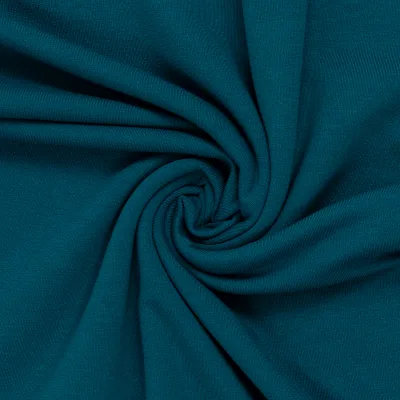
Swafing Maike French Terry Petrol 750
€6.95per 0.5 m
Unit price €13.90 / m
Swafing Eike Brushed Sweat Petrol 750
€7.95per 0.5 m
Unit price €15.90 / m
Sewing Pattern Dana Jogpants by pattydoo
€10.99per piece
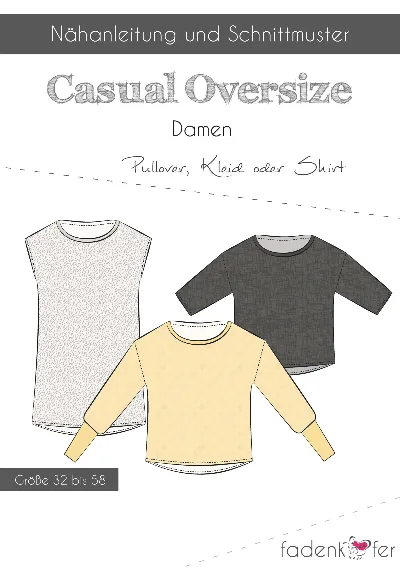
Paper Sewing Pattern Casual Oversize Pullover Damen
Back soon€12.90per piece