What Is Corduroy and How Do You Sew It?
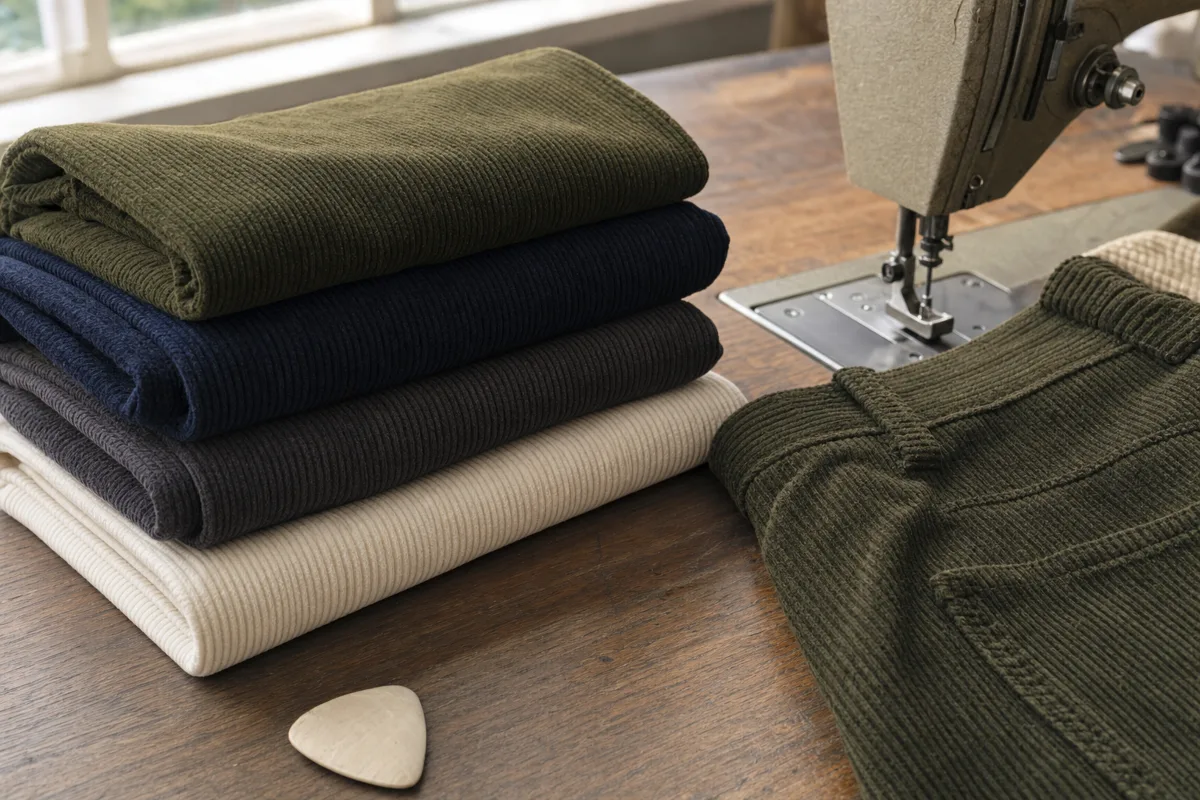
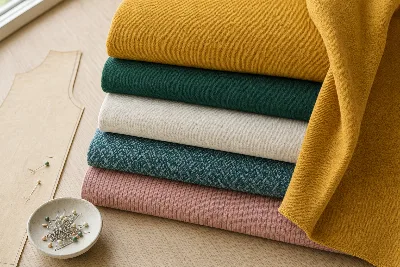
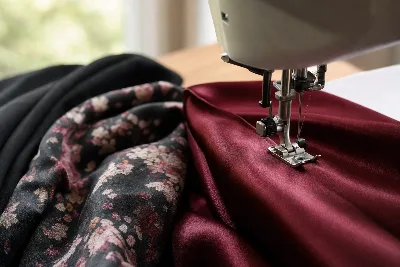
Image created with AI
Corduroy, often simply called cord, is a woven fabric with a velvety pile arranged in raised ribs, known as wales. These ribs run parallel to the selvedge, in other words along the straight grain. Depending on the width of the ribs, you'll come across fine wale corduroy (also called needlecord) with narrow, closely spaced ribs, or wide wale corduroy with bold, clearly visible ribs. Corduroy is warm, hard-wearing and has that typically soft handle that makes it a classic for trousers, skirts, jackets and waistcoats.
You can sew corduroy on any ordinary domestic sewing machine. Three things matter: cut all pattern pieces with the pile running in the same direction, sew with a sturdy needle and a slightly longer stitch, and only press from the wrong side so the pile doesn't get flattened.
How is corduroy made?
Like velvet, corduroy is a pile fabric. During weaving, extra pile weft threads are woven in; these are then cut open so that they stand upright as short fibres. Because these pile threads are grouped in lengthwise bands, they form the ribs, with the flatter base fabric lying between them. If you're interested in related pile fabrics, have a look at our velvet fabrics too.
Fibres: cotton, polyester, wool
Classic corduroy is made from cotton. It's breathable and gets a little softer with every wash. It often contains a small amount of elastane, which gives the fabric a bit of ease – particularly comfortable in trousers. There's also polyester corduroy, which holds its shape, is easy to care for and often has a particularly lush, plush pile. Wool corduroy or corduroy made from wool blends is less common and is mainly used for warm winter wardrobes.
The corduroy fabrics mentioned here compared
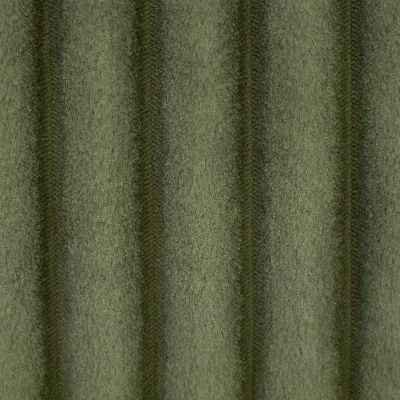
The two fabrics mentioned here from our corduroy category are quite different. Marian corduroy by Swafing is made from 97% cotton and 3% elastane and weighs around 330 g/m². That makes it a versatile dressmaking corduroy that works well for trousers, skirts, dungarees or shirt jackets. Plön plush wide wale corduroy by Swafing is 100% polyester and, at around 420 g/m², considerably heavier. With its wide, fluffy ribs it's better suited to jackets, waistcoats, bags or cushions than to close-fitting garments.
| Fabric | Fibre content | Weight | Width | Uses | Needle / stitch |
|---|---|---|---|---|---|
| Marian corduroy by Swafing | 97% cotton, 3% elastane | approx. 330 g/m² | approx. 140 cm | Trousers, skirts, dungarees, shirt jackets | Universal or jeans needle 90/14, straight stitch approx. 3 mm |
| Plön plush wide wale corduroy by Swafing | 100% polyester | approx. 420 g/m² | approx. 140 cm | Jackets, waistcoats, bags, cushions | Jeans needle 90/14 to 100/16, straight stitch approx. 3 to 3.5 mm |
Wash both fabrics at 30 °C (Marian on a gentle cycle), without fabric softener or bleach, and let them dry naturally rather than in the tumble dryer. Press on a low heat setting.
Cutting corduroy: mind the nap
The pile on corduroy doesn't stand straight up but leans slightly. If you run your hand lengthwise over the fabric, it feels smooth in one direction and slightly rough in the other. This affects how it looks: depending on the direction, the fabric appears lighter and shinier or darker and richer. If two pattern pieces are laid out the opposite way round, it looks as though they've been cut from two different fabrics.
- Mark the direction of the nap with chalk or an arrow on the wrong side of the fabric before you cut.
- Lay out all pattern pieces so their top edges point in the same direction (a ‘with nap’ layout). This often means you'll need a little more fabric than for plain woven fabrics.
- Line the grainline arrow up exactly with the ribs, otherwise they'll run at an angle across the trouser leg or skirt panel.
- With wide wale and plush corduroy, it's best to cut in a single layer. When folded double, the layers shift easily because the ribs slide into one another.
If you work with PDF sewing patterns, you'll save yourself a lot of taping by having the sheet printed in large format, for example with our sewing pattern printing service. Large, continuous pieces are easier to line up neatly on a pile fabric.
Sewing corduroy: needle, stitch and feed
Corduroy is thicker than many other woven fabrics, especially where several layers meet, such as at the trouser waistband or the pockets. A sturdy 90/14 needle copes well with Marian corduroy. For very thick areas or for the plush wide wale corduroy, you can go up to a 100/16.
Set a stitch length of about 3 mm. Stitches that are too short make the seam wavy on thick fabric. Because the two pile sides shift against each other as you sew, a walking foot helps enormously. If you don't have one, sew slowly, pin closely and reduce the presser foot pressure if needed.
Decorative stitching and topstitching
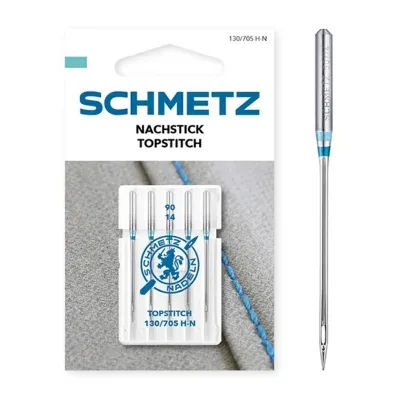
Visible topstitching on pockets, yokes or hems looks especially good on corduroy with a slightly thicker thread. A needle with a larger eye is ideal for this, for example the Topstitch/Metallic 90 by Schmetz. It's best to topstitch in the groove between two ribs or parallel to them, so the thread doesn't sink into the pile.
Finishing and grading seam allowances
Corduroy frays at the cut edges, so you should finish the seam allowances straight after cutting or right after sewing, using an overlocker or zigzag stitch. Where lots of layers meet, grade the seam allowances by trimming them to different widths so you don't end up with bulky ridges.
Pressing corduroy properly
The pile is sensitive to pressure. If you press from the right side, you'll get shiny, flattened patches that are hard to lift again. So always press from the wrong side and place a thick terry towel or a piece of corduroy, pile side up, underneath. That way the pile can sink in rather than being squashed flat. It's better to open seam allowances with steam and light pressure rather than pressing down firmly.
Common mistakes
- Ignoring the nap: one trouser leg looks lighter than the other.
- Not prewashing: cotton corduroy can shrink in its first wash. Wash it before cutting, the same way you plan to wash the finished garment later.
- Pressing from the right side: the pile ends up with shiny patches.
- Needle too fine: it bends or breaks at thick spots. Better to go up a size.
- Ribs cut off-grain: this is instantly noticeable on corduroy. Line the grainline arrow up precisely along a rib.
- Unpicking and resewing seams: on corduroy, needle holes and pressure marks often remain visible. Test tricky areas on a scrap first.
The best way to understand the difference between Marian corduroy and Plön plush wide wale corduroy is to feel the fabrics in your hands. You can touch them in our shop in Neumarkt-Woffenbach, and if you'd rather not tackle your first corduroy project alone, you'll find a sewing space and support in our Royal Sewing Room (Königliches Nähstübchen).
Frequently asked questions
What is corduroy called in German?
In German, corduroy is usually called Cord, and sometimes Kordsamt or Rippensamt. It always refers to a woven fabric with a velvety pile in lengthwise ribs.
What's the difference between corduroy and velvet?
Both are pile fabrics. On velvet, the pile covers the surface evenly; on corduroy, it's grouped into ribs with the flatter base fabric lying between them.
Is polyester corduroy suitable for clothing?
Yes, especially for jackets, waistcoats and coats. Polyester corduroy holds its shape and creases little, but it's less breathable than cotton corduroy, so it's more of a second choice for close-fitting trousers.
Can I sew corduroy on an ordinary domestic sewing machine?
Yes. A sturdy needle, a slightly longer stitch and sewing slowly over thick areas are all you need. A walking foot makes it easier but isn't essential.
Which corduroy is best for beginners?
A medium-weight cotton needlecord with a little elastane is the most straightforward. It slips less than plush corduroy and is more forgiving of small inaccuracies when lining up the ribs.
Matching categories
Matching products
Corduroy Marian by Swafing Dark Blue
€8.45per 0.5 m
Unit price €16.90 / m
Plush Wide-Wale Corduroy Plön by Swafing Khaki
€8.45per 0.5 m
Unit price €16.90 / m
Machine Needles
€4.90per piece